

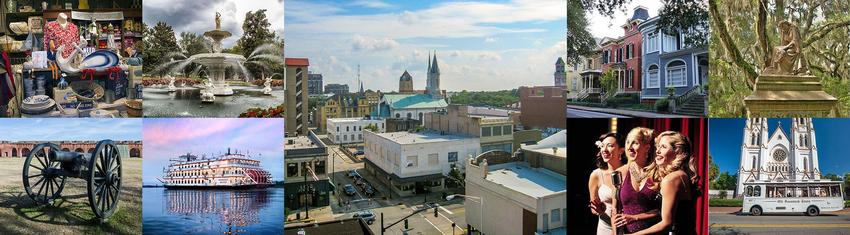
Savannah Travel Information
This historic city is often pictured as the epitome of Southern charm and hospitality. The city's architecture and history lend themselves to this reputation. It is noted for its St. Patrick's Day celebration, the second largest in the United States, behind Boston. The downtown area is the largest National Historic Landmark District in the United States and features tons of amazing activities with lots of lodging available nearby. Book a vacation package to this great city today!
City Weather and Climate:
- Average daily temperature: 65°F
- Average annual rainfall: 50'
City Safety Phone # and Major Hospitals:
- Police/Fire/Ambulance: 911
- Candler General Hospital (5353 Reynolds St., 912-692-6637)
- Memorial Medical Center (4700 Waters Ave., 912-350-8390)
City Top Tourism Draws and Seasons:
- Historic District
- Victorian District
- Riverfront
- City Market
- Bonaventure Cemetery (made famous in the movie, 'Midnight in the Garden of Good and Evil'
- History Museum
- Savannah Riverboat Cruises
- Ships of the Sea Maritime Museum
- First African Baptist Church
- Ralph Mark Gilbert Civil Rights Museum
- Ft. Pulaski National Monument
- Oktoberfest
- Seafood Festival
City Major Shopping Areas:
- Riverfront
- City Market
- Oglethorpe Mall
- Festival Factory Stores
- Paris Flea Market
City Major Dining Areas:
- Southside
- Islands
- Historic District
- Westside
- Eastside & Thunderbolt
City Famous Landmarks & Historic Places:
- Historic District
- Victorian District
- Ft. Pulaski National Monument
- Owens-Thomas House
- Beaux-Arts style Edmund Molyneux Mansion
- Spencer Woodbridge House
- Gothic Revival Greene House
- Beach Institute
- King-Tisdell Cottage
- Andrew Low House
- Davenport House Museum
- Green-Meldrim Home
- Juliette Gordon Low's Birthplace
- Owen-Thomas House and Museum
- Telfair Mansion and Art Museum
Interesting Facts about City:
It was used for shooting many feature films including the following:
- 2000: The Gift
- 1999: The Legend of Bagger Vance
- 1998: Forces of Nature, The General's Daughter
- 1997: The Gingerbread Man, Midnight in the Garden of Good and Evil, Kiss of Fire
- 1996: Wild America
- 1995: Something to Talk About
- 1994: Now and Then
- 1993: Forrest Gump, Camilla
- 1990: Goldenboy, Love Crimes
- 1989: The Rose and the Jackal, Flight of the Intruder, Glory
- 1988: The Return of Swamp Thing, The Judas Project
- 1987: My Father, My Son
- 1969: War Stories
- 1986: Pals
- 1983: Solomon Northup Odyssey
- 1981: All My Children, Tales of Ordinary Madness
- 1980: The Slayer, White Death, Scared to Death, When the Circus Came to Town, Fear, East of Eden, Mother Seton
- 1979: Gold Bug, The Ordeal of Dr. Mudd, Orphan Train, Hopscotch
- 1978: The Double McGuffin
- 1977: The Lincoln Conspiracy
- 1976: Roots (mini-series)
- 1975: Gator
